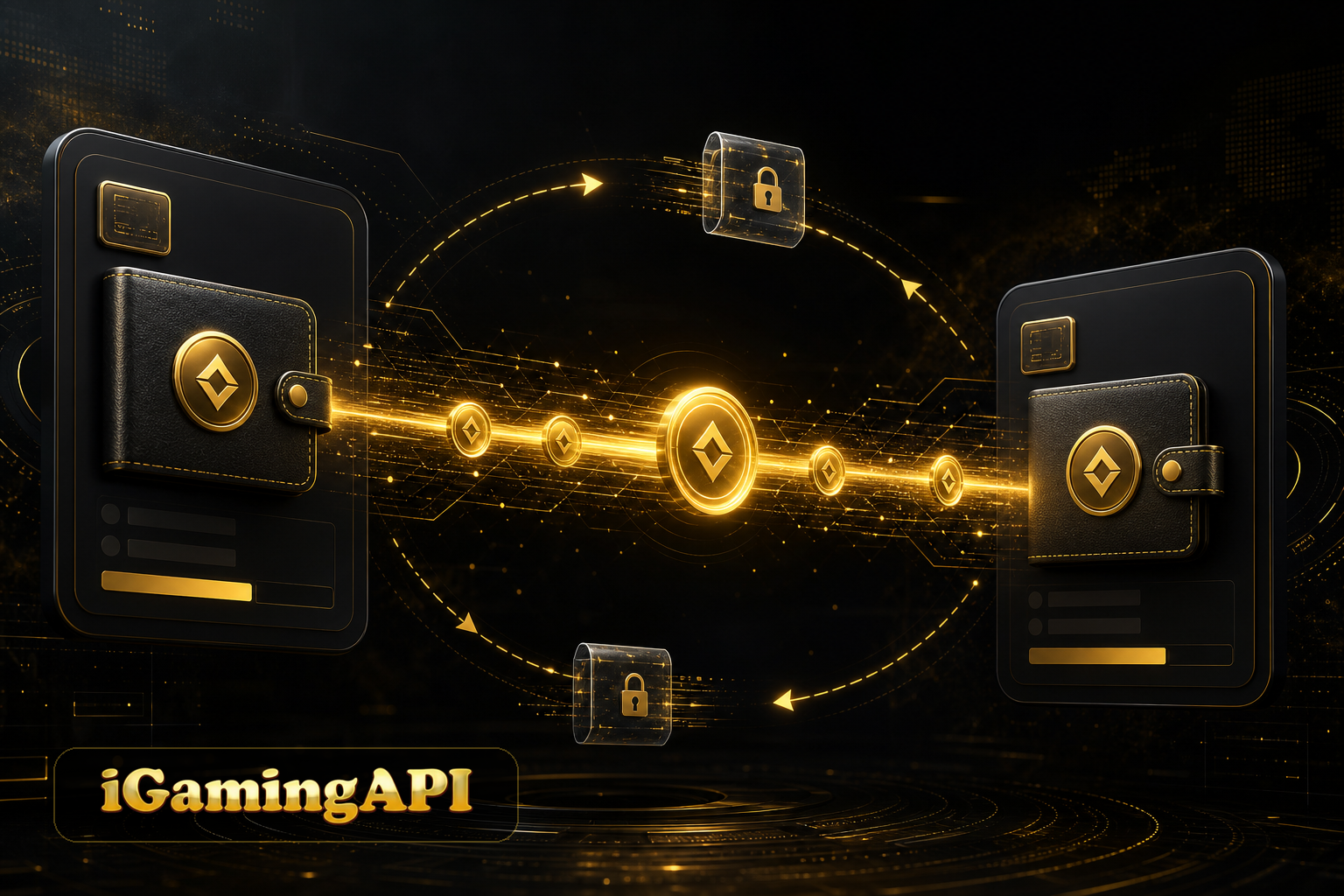
Seamless wallet integration is the backbone of every modern casino platform: players expect balances to update instantly as reels spin, crash multipliers climb, or cards are dealt, without manual transfers into a separate “game wallet.” For operators connecting through iGamingAPIs.com, SoftAPI implements a streamlined variant of that experience—often described as notify-only seamless play—where session balances are managed on the aggregator side while your backend receives HTTPS callbacks for bets, wins, and settlement adjustments including rollbacks when upstream rounds are voided or corrected.
This tutorial is a long-form technical guide to SoftAPI seamless wallet behavior: how launch-time balance seeds a session, how bet and win POST payloads arrive at your callback URL, how rollback-like corrections should be modeled in your ledger, and how to build production-grade handlers in PHP or Node.js without blocking provider retries. Whether you are wiring your first callback endpoint after purchasing an API key or hardening an existing integration before peak traffic, the patterns here align with the official SoftAPI documentation and real-world operator lessons from 2026 deployments.
What “Seamless Wallet” Means in SoftAPI Context
In classic transfer-wallet integrations, every spin triggers a synchronous debit request from the game server to your operator API: “may this player bet 1.00?” Your system responds yes or no, funds move, and only then does animation proceed. That model offers maximal control but adds latency and failure modes at each micro-transaction.
SoftAPI seamless wallet flow, as commonly configured on iGamingAPIs.com, inverts part of that responsibility. You pass an opening balance when launching a game via encrypted POST. During play, SoftAPI and upstream providers track in-session debits and credits. Your platform receives asynchronous callback notifications summarizing settlements—typically including bet_amount, win_amount, and identifiers like game_round—while notify_only flags indicate you should treat many events as informational rather than initiating duplicate balance mutations on your side if the aggregator already applied them.
Understanding notify-only semantics prevents the most expensive bug new operators introduce: double-adjusting player wallets locally on every callback while SoftAPI also adjusted session balance upstream, producing drift between your CRM and player reality. Confirm wallet responsibilities during onboarding; document them in runbooks your finance team signs off on.
Seamless vs Transfer Wallet at a Glance
Teams evaluating Buy API KEY packages sometimes assume seamless means “no callbacks.” The opposite is true: seamless shifts real-time debit authority but increases importance of reliable webhook ingestion. Transfer wallets need low-latency approve/deny endpoints; seamless wallets need idempotent event stores and fast HTTP 200 responses.
End-to-End Session Flow
The seamless lifecycle spans five phases your engineering wiki should diagram once and reuse in every provider onboarding doc.
- Authentication — Player logs into your site; you load current spendable balance from your ledger or wallet service.
- Launch — Backend encrypts payload with API Secret and POSTs to SoftAPI launch URL; player redirects to returned game URL.
- Play — Bets and wins occur inside provider HTML5 client coordinated by SoftAPI session state.
- Callback — SoftAPI POSTs settlement JSON to your
callbackURL from launch payload. - Return — Player hits exit; browser lands on
returnURL; your lobby refreshes balance display from authoritative sources.
Player click "Play"
    → Your API: read balance B from ledger
    → Encrypt { user_id, balance: B, game_uid, callback, return, ... }
    → POST SoftAPI launch → { code:0, data:{ url } }
    → Redirect player to url

During session (managed by SoftAPI / provider):
    spin → internal debit/credit
    round close → build callback event

SoftAPI → POST https://yoursite.com/api/softapi-callback
    → Your handler: decrypt (if enc=1), parse, idempotent store
    → Respond 200 { code:0, msg:"OK" } quickly

Player exits → GET return URL → lobby shows updated balance
Launch Payload Wallet Fields That Matter
Seamless wallet correctness starts before the first callback. Two launch fields dominate: balance and currency_code.
balance must reflect what the game should treat as available stake currency for this session—not a cached value from login unless you refresh at click time. Bonus-wallet operators often subtract locked promo funds before computing launch balance. If a player deposits mid-session, SoftAPI may not see new funds until a relaunch depending on upstream behavior; product UX should offer “refresh game” that re-launches with updated balance.
currency_code aligns display and settlement semantics for the session (USD, EUR, THB, etc.). Operator GGR billing on iGamingAPIs.com typically still settles against USDT wallet balance independent of player currency. Finance exports should not conflate player-session currency with USDT invoice lines without an FX policy.
callback must be HTTPS and reachable without authentication headers SoftAPI cannot send. Use stable production URLs; changing callback paths mid-campaign splits historical analytics unless you migrate logs.
Callback Transport: Plain JSON vs Encrypted Payload
Accounts with encryption enabled (enc=1) receive outer wrappers:
{
  "payload": "<base64 AES-256-ECB ciphertext>",
  "timestamp": 1710000000000
}
Decrypt with the same 32-character API Secret used for launch, PKCS7-unpad, JSON-parse inner event. Accounts with encryption off receive plain event objects directly—simpler for debugging, riskier if logs leak. Production environments typically prefer encryption and strict log redaction.
Regardless of wire format, respond HTTP 200 quickly. SoftAPI ignores response body content for balance authority in notify-only mode but uses status codes to decide retries on network or server errors. Heavy work—CRM updates, affiliate postbacks, analytics—belongs in a queue fed by a thin controller.
Bet Callbacks: Anatomy and Ledger Treatment
A bet settlement callback communicates how much stake attached to a round. Representative decrypted JSON:
{
  "game_id": 42,
  "game_uid": "8771",
  "game_round": "rnd-20260422-991823",
  "member_account": "1001",
  "bet_amount": 10.00,
  "win_amount": 0,
  "timestamp": 1710000000123,
  "notify_only": true,
  "serial_number": "sn-88421",
  "game_name": "Example Slot"
}
Field notes for implementers:
member_account— string form of your launchuser_id; join keys for ledger tables.bet_amount— stake for this settlement event; may represent full round bet depending on provider chunking.win_amount— payout; zero for pure loss rounds in many slots.game_round— primary idempotency key; unique per round in healthy datasets.serial_number— secondary idempotency key when present; use COALESCE logic in upserts.notify_only— when true, SoftAPI already adjusted session balance; your CRM mirror should record event without duplicating debit.
Recommended ledger pattern: append-only game_transactions table with unique constraint on (game_round, event_type) or (serial_number) when populated. Store raw JSON for disputes. Derive player-visible history from this table rather than mutating ambiguous summary rows.
Win Callbacks: Credits, Multipliers, and Combined Settlements
Many providers emit a single callback per round with both bet_amount and win_amount populated after the round completes, rather than separate bet-then-win messages. Crash games and arcade titles may follow similar combined patterns. Do not assume two HTTP POSTs per spin; instead, write handlers that upsert one row per game_round with latest known amounts.
When win_amount exceeds bet_amount, net player gain is positive; finance computes GGR contribution as bet minus win at aggregate levels. For notify-only wallets, your player-facing balance after exit should reconcile with launch balance plus sum(net results) of rounds in session modulo timing skew.
Large wins sometimes arrive in the same payload shape as small wins; alert thresholds should key off win_amount absolute values and velocity, not message type distinctions that SoftAPI does not guarantee.
Rollback Callbacks: Voids, Corrections, and Idempotent Reversal
Rollback is the industry term for undoing or correcting a previously recorded bet or win—causes include provider-side void rounds, interrupted game states, duplicate transmission reconciliation, or regulatory refund mandates. SoftAPI may surface rollback semantics through callbacks that reference prior game_round values, zero-out amounts, or send corrective bet_amount / win_amount pairs that imply reversal when compared to earlier stored events.
Because upstream providers differ, treat rollback handling as a policy layer on top of generic callback ingestion:
- Index all callbacks by
game_roundandserial_number. - When a new event references an existing round with altered amounts, compute delta against stored record rather than inserting duplicate full bets.
- If amounts drop to zero with provider void flags in metadata when present, mark original round
status=voidedand emit compensating ledger entries. - Never delete financial records; append reversal rows for auditability.
// Rollback handling pseudocode
function processCallback(event):
    key = event.game_round || event.serial_number
    prev = db.findByRound(key)
    if prev is null:
        db.insert(event)
        return
    delta_bet = event.bet_amount - prev.bet_amount
    delta_win = event.win_amount - prev.win_amount
    if delta_bet != 0 or delta_win != 0:
        db.insertAdjustment(key, delta_bet, delta_win, event)
        db.updateRound(key, event)
    // idempotent: identical repeat POST → no-op
Soft language matters: not every brand emits explicit “rollback” type strings; defensive engineering assumes duplicates and corrections will arrive and must not double-count GGR in USDT settlement reports on iGamingAPIs.com.
Comparison Table: Wallet Integration Models
| Aspect | SoftAPI Seamless (Notify-Only) | Transfer Wallet (Generic) | Hybrid / Mirror Ledger |
|---|---|---|---|
| Debit timing | Inside SoftAPI session after launch balance | Synchronous operator API per bet | SoftAPI session + local mirror updates on callback |
| Callback role | Informational settlement + reconciliation | Confirmation of already-approved bets | Source of truth for displayed balance |
| Latency sensitivity | Moderate (async POST) | Very high (blocks spin) | Moderate |
| Rollback complexity | Correction via subsequent callbacks | Explicit cancel API calls | Mirror must apply deltas carefully |
| Engineering effort | Launch encrypt + fast webhook + idempotency | Low-latency debit APIs + idempotency | Highest; two systems to keep aligned |
| Typical use on iGamingAPIs.com | Default path for many SoftAPI keys | Less common unless custom contract | Operators showing unified balance in CRM |
Step-by-Step: Implementing Your Callback Endpoint
Step 1 — Provision HTTPS Route
Create POST /api/softapi-callback on a domain listed in your client panel. TLS certificate must be valid; intermediate chains complete. Disable basic auth on this path—authentication is via optional payload encryption, not HTTP auth headers.
Step 2 — Load Secret Safely
Read 32-byte API Secret from environment or vault at process start. Validate length in unit tests; misconfigured secrets cause decrypt failures that look like provider outages.
Step 3 — Parse and Optional Decrypt
Read raw body; JSON-decode. If payload string key exists, decrypt to inner event object before field access.
Step 4 — Validate Minimum Fields
Require member_account and at least one of game_round, serial_number. Log and still return 200 for malformed test probes if support asks, but alert internally—pattern differs by team policy.
Step 5 — Idempotent Upsert
Transactionally insert or update round record; write adjustment rows when bet/win values change implying rollback.
Step 6 — Fast 200 Response
Return {"code":0,"msg":"OK"} then asynchronously fan-out to analytics.
Step 7 — Reconciliation Job
Nightly cron compares sum of net callbacks vs USDT GGR wallet delta on iGamingAPIs.com dashboard; investigate variance above tolerance.
POST /api/softapi-callback handler flow:

1. body = readRawBody()
2. json = parseJSON(body)
3. if json.payload: event = decrypt(json.payload, SECRET)
   else: event = json
4. id = event.game_round or event.serial_number
5. BEGIN TRANSACTION
6.   upsert game_round id with bet_amount, win_amount, member_account
7.   if amounts changed vs previous: insert adjustment row (rollback)
8. COMMIT
9. enqueue analytics(event)
10. return HTTP 200 JSON OK
PHP Callback Handler Reference
PHP operators often deploy callback scripts beside legacy admin panels. Mirror official samples from documentation: read php://input, decrypt if needed, never echo secrets in errors.
<?php
declare(strict_types=1);
header('Content-Type: application/json; charset=utf-8');

$secret = getenv('SOFTAPI_SECRET'); // 32 chars

function decryptEvent(array $json, string $secret): array {
    if (!empty($json['payload']) && is_string($json['payload'])) {
        $plain = aes256ecb_decrypt($json['payload'], $secret);
        $event = json_decode($plain, true);
        if (!is_array($event)) throw new RuntimeException('bad json');
        return $event;
    }
    return $json;
}

try {
    $json = json_decode(file_get_contents('php://input') ?: '', true);
    $event = decryptEvent($json ?? [], $secret);
    $roundId = (string)($event['game_round'] ?? $event['serial_number'] ?? '');
    $userId = (string)($event['member_account'] ?? '');
    $bet = (float)($event['bet_amount'] ?? 0);
    $win = (float)($event['win_amount'] ?? 0);
    // idempotentUpsert($roundId, $userId, $bet, $win, $event);
    echo json_encode(['code' => 0, 'msg' => 'OK']);
} catch (Throwable $e) {
    http_response_code(400);
    echo json_encode(['code' => 1, 'msg' => 'decrypt failed']);
}
Node.js Express Handler Reference
app.post('/api/softapi-callback', express.json({ limit: '1mb' }), async (req, res) => {
  try {
    let event = req.body;
    if (event?.payload) {
      event = JSON.parse(aes256EcbDecrypt(event.payload, secret));
    }
    const roundId = String(event.game_round || event.serial_number || '');
    await ledger.upsertRound({
      roundId,
      userId: String(event.member_account || ''),
      bet: Number(event.bet_amount || 0),
      win: Number(event.win_amount || 0),
      raw: event,
    });
    res.status(200).json({ code: 0, msg: 'OK' });
  } catch (e) {
    res.status(400).json({ code: 1, msg: 'decrypt failed' });
  }
});
Testing Bet, Win, and Rollback Paths in Staging
Staging validation should cover:
- Loss round — bet_amount > 0, win_amount = 0; ledger net decreases appropriately in mirror models.
- Win round — win_amount > bet_amount; verify GGR math.
- Duplicate POST — replay identical payload twice; single logical row remains.
- Correction POST — simulate changed win_amount for same game_round; adjustment row records rollback delta.
- Encrypted vs plain — toggle enc flag if account supports both in environments.
- Slow handler — artificial 2s sleep should not occur in production; confirms timeout risk.
Use real launches from SoftAPI docs against low-value test players rather than fabricating JSON without launch context—field combinations vary by provider brand available in catalog.
Observability and Alerting
Instrument callbacks with metrics: softapi_callback_received_total, softapi_callback_decrypt_errors, softapi_callback_duplicate_total, softapi_callback_latency_ms. Alert on error rate spikes correlated with single game_uid values—often first signal of upstream maintenance.
Structured logs should include roundId, userId hash, bet, win, notify_only—not full secrets or PII beyond policy. Trace IDs linking launch request logs to callback logs shorten incident triage when players report “balance wrong after slot.”
Security Hardening
- Restrict callback route to POST only; reject GET scanners.
- Rate-limit by IP only if support confirms SoftAPI egress ranges; blind IP blocks drop legitimate settlements.
- Validate decrypted JSON schema before DB writes to prevent injection via unexpected types.
- Separate callback DB user permissions from admin panel credentials.
- Rotate API Secret on compromise; expect brief decrypt failures until all workers update.
Use Cases for Seamless Wallet Callback Processing
CRM and Responsible Gaming
Stream callbacks into risk engines calculating loss streaks or session duration for cooldown prompts. Notify-only mode still gives accurate bet magnitudes for RG analytics when sessions end.
Affiliate and CPA Reconciliation
Affiliates often demand proof of first bet or NGR thresholds. Callback tables supply auditable bet timestamps tied to member_account acquisition source if you stamp UTM at registration.
Customer Support Lookup
Support consoles querying game_round show exact bet/win history without accessing provider backoffice portals per ticket.
Finance and USDT GGR Alignment
Aggregate callback net win across days and compare to iGamingAPIs.com wallet debits; variance triggers finance review before month-end close.
Operational Checklist
- Callback URL uses HTTPS with auto-renewing certs.
- Handler returns 200 within <500ms at p95.
- Idempotency keys enforced in database constraints.
- Rollback delta logic documented and tested.
- Encrypted payload path enabled for production when available.
- Reconciliation cron emails finance weekly.
- Runbook links to SoftAPI docs and support Telegram.
- Staging mirrors production secret handling patterns.
- Player return URL refreshes balance from authoritative source.
- Incident playbooks for callback outage include estimated GGR exposure window.
FAQ: SoftAPI Seamless Wallet and Callbacks
1. Does seamless mean I skip callbacks entirely?
No. Seamless refers to player UX and where session debits execute; callbacks remain essential for reconciliation, CRM, RG, and mirror ledgers.
2. What does notify_only true imply?
SoftAPI already adjusted session balance; avoid applying the same debit or credit again on your operator wallet unless you maintain an independent mirror with clear rules.
3. How do I handle rollbacks without a explicit rollback field?
Compare new callbacks to stored game_round records; insert adjustment entries when amounts change; never delete original rows.
4. Can I use the same callback URL for multiple brands?
Yes—events include game_uid to distinguish titles; partition analytics accordingly.
5. What if my callback is down for an hour?
Restore service; review SoftAPI retry behavior with support; backfill from client panel callback history if available; reconcile before invoicing.
6. Should I update player balance on every callback?
Depends on mirror strategy; many operators update only on return to lobby or periodic polling if notify-only upstream owns session funds.
7. Are callbacks encrypted by default?
Encryption depends on account enc configuration; handlers should support both wrapped and plain payloads during migration.
8. How do bet and win appear for crash games?
Often as combined settlement POSTs after round resolution; still key idempotency on game_round.
9. Where do I find sample code?
Official PHP and Node samples live on iGamingAPIs.com documentation.
10. Do I need separate callbacks for staging?
Recommended—use staging subdomain paths and separate databases to avoid test rounds polluting production GGR reports.
11. What HTTP codes trigger retries?
Typically non-2xx responses; always verify current behavior in documentation rather than assuming.
12. Can callbacks arrive after player returns to lobby?
Yes—late POSTs happen; lobby balance refresh should tolerate asynchronous settlements.
Integrating With Broader Platform Architecture
Microservice adopters publish callback events to Kafka topic softapi.settlements with schema registry versioning. Monolith adopters write SQL directly. Serverless adopters must watch connection pool exhaustion under burst; provision concurrency limits and RDS proxy as needed.
Link launch logs and callback logs with shared user_id and session launch timestamp UUID your backend generates before encrypting SoftAPI payload—even though SoftAPI does not require it, internal correlation transforms support from hours to minutes.
Common Mistakes When Wiring Seamless Wallets
- Applying local wallet debit on notify_only callbacks, double-charging players in CRM display.
- Returning HTTP 500 on decrypt errors caused by secret typos—fix config instead of triggering endless retries.
- Missing idempotency, inflating GGR and USDT charges.
- Blocking request thread on Slack webhooks, causing timeout retries and duplicate rows without idempotency.
- Ignoring rollback deltas, reporting inflated revenue to executives.
- Using HTTP callback URLs in production launch payloads.
- Storing API Secret in WordPress wp_options beside callback plugin code.
Performance at Scale
Peak sporting events can generate callback bursts when many players finish slots simultaneously. Horizontal scale stateless receivers behind load balancers; push deduplication to database unique indexes rather than in-memory sets that vanish on deploy.
Batch analytics can lag seconds behind HTTP 200; never batch inside request thread. Use COPY ingest to warehouse nightly if realtime BI is unnecessary.
Regulatory and Audit Considerations
Licensed operators often must retain game transaction logs for years. Append-only stores with rollback adjustment rows satisfy auditors better than mutable balance columns alone. Timestamp fields from callbacks should be stored alongside server receipt time to detect clock skew.
Personal data minimization in logs reduces GDPR exposure; hash member_account in analytics exports if sufficient for funnel metrics.
Deep Dive: Net Amount Calculations for Finance
Finance teams rarely care about individual HTTP POST shapes; they care about net gaming revenue aggregated per day, per brand, per market. From callback rows, define net_player = win_amount - bet_amount at round granularity and ggr_contribution = bet_amount - win_amount for house perspective. Sum ggr_contribution across rounds where notify_only applied upstream, then compare the aggregate to USDT wallet movement on your iGamingAPIs.com operator panel. Minor timing differences across midnight UTC boundaries are normal; structural gaps are not.
When rollback adjustments exist, apply deltas to the reporting period when correction callbacks arrive, not retroactively rewriting closed books without finance approval. Immutable fact tables with adjustment columns preserve audit narrative.
Multi-currency player sessions complicate executive dashboards unless you freeze daily FX rates. Document whether reports use callback currency_code from launch metadata stored alongside rounds or normalize to USD at receipt time.
Session Balance vs Site Balance: Player Communication
Players conflate “seamless” with “one balance everywhere.” In practice, session balance inside iframe may lag site wallet if deposits occur mid-game or if callbacks have not yet reached mirror services. Support scripts should explain that relaunching the game refreshes session seed from current ledger, and that pending settlements may take seconds after exit.
UX mitigations include showing “last updated” timestamps on balance widgets and disabling deposit-success-to-play funnels until webhook confirms funding—not merely PSP redirect success.
VIP hosts should query internal callback tables before accusing providers of “missing wins”—often the win callback arrived but CRM cache TTL hid it.
Database Schema Recommendations
A durable schema includes tables: softapi_launches (launch_id, user_id, game_uid, balance_sent, currency, callback_url, created_at), softapi_rounds (round_id PK, user_id, game_uid, bet_amount, win_amount, status enum active/voided/settled, first_seen_at, last_seen_at), and softapi_adjustments (adjustment_id, round_id FK, delta_bet, delta_win, reason, raw_json, created_at).
Indexes on (user_id, last_seen_at) accelerate support consoles; unique index on round_id enforces idempotency. Partial indexes on voided status help compliance reports.
Never store API Secret in these tables; encrypt raw_json at rest if it contains sensitive marketing tags.
Queue Workers and Retry Safety
After HTTP 200, push events to SQS, RabbitMQ, or Redis streams for downstream CRM. Workers must re-check idempotency because queue redelivery duplicates messages. Use same database unique constraints as HTTP path.
Dead-letter queues with alert thresholds catch schema drift when SoftAPI adds fields your deserializer rejects. Version event schemas with optional fields only.
Backpressure during queue outages must not block HTTP handlers—memory-bound in-process queues risk OOM; bound channel depth and drop to DLQ with paging.
Provider Brand Variability in Callback Timing
Slots from studios such as JILI—often requested via JILI brand catalog—may batch settlements differently from crash or fishing titles also available in SoftAPI catalog. Do not hard-code “one callback per spin” assumptions into fraud models.
Instead, build time-window aggregations per user_id for velocity checks, using receipt timestamps from your server clock.
Brand-specific anomalies should be documented in internal wikis when discovered during QA, not treated as universal SoftAPI laws.
Disaster Recovery and Callback Backfill
When rebuilding database from backups, replay archived callback logs if you store them in S3 or equivalent. Order by timestamp and respect idempotent upsert semantics so replay does not duplicate adjustments.
Coordinate with iGamingAPIs.com support if extended outage prevented any callbacks from delivering; they may guidance on historical data export depending on account tooling.
RTO/RPO targets for callback infrastructure should appear in operator SOC documentation alongside primary site DR plans.
Extended FAQ: Rollback and Settlement Edge Cases
13. What if bet_amount is zero but win_amount is positive?
May indicate free-spin or promotional round settlement; store as distinct promotion_type if your CRM distinguishes bonus play.
14. Can two different game_round values refer to same spin?
Rare but possible during provider migrations; support investigation uses serial_number and timestamps.
15. Should I expose rollback events to players?
Transparency policies vary by licence; many operators show corrected history rows labeled “adjustment” in transaction UI.
Building Confidence Before Go-Live
Engineering leads should sign a callback readiness review listing measured p95 handler latency, idempotency test evidence, rollback simulation output, and finance reconciliation tolerance agreed with accounting. Product signs lobby return URL balance refresh demo. Compliance signs log retention configuration. Only then enable production launch credentials on marketing landing pages linking to iGamingAPIs.com.
SoftAPI seamless wallet tutorials age quickly if you treat this article as substitute for live documentation—revalidate field names and encryption defaults quarterly.
Operators who invest in callback correctness early spend less on emergency consultants after first major promotion; the work is unglamorous but is the real foundation beneath seamless player experience.
Mirror Ledger Pattern: When Operators Sync Local Balances
Some teams choose a hybrid mirror ledger even under notify-only SoftAPI semantics because their CRM, affiliate engine, or bonus system requires a locally authoritative player balance column updated in near real time. The mirror pattern applies callback deltas to internal wallets while treating SoftAPI session state as upstream truth during active play. Implementation rules are strict: on callback receipt, compute net_delta = win_amount - bet_amount relative to any prior stored row for the same game_round, apply only the incremental delta to local balance, and never apply full bet debit plus full win credit twice on duplicate POST.
When rollback corrections arrive with reduced win amounts, mirror ledgers must claw back prior credits symmetrically. Support tickets alleging “missing money” often trace to mirror code applying gross bet_amount subtraction on every callback instead of net settlement math. Unit tests should include sequences: loss, win, duplicate win POST, corrective rollback POST.
Display balance in lobby should read from mirror table after session end, optionally with small “syncing” indicator while late callbacks still arrive. During active iframe play, hide manual withdrawal buttons if business rules require settled sessions first.
Webhook Signature Verification and Defense in Depth
SoftAPI commonly relies on optional AES payload encryption rather than HMAC headers for callback authentication. When encryption is enabled, decryption success proves possession of the shared secret. Teams still terminate TLS at modern cipher suites, restrict admin access to secrets, and monitor for anomalous POST volumes from unexpected IP ranges. Penetration tests should attempt forged callbacks without valid ciphertext.
If your security policy demands additional verification, some operators store a launch-time session nonce in database keyed by user_id and reject callbacks whose timestamps fall far outside session bounds. This is custom logic—not always documented in aggregator specs—so calibrate false-positive rates before blocking legitimate late settlements.
Time Synchronization and Ordering Guarantees
Callback JSON includes provider-side timestamp in milliseconds; your server should record received_at separately. Never assume callbacks arrive in strict chronological order per player. Network retries reorder events. Idempotent upsert by round identifier resolves ordering ambiguity better than “last write wins” on user balance without round granularity.
Daylight-saving changes and mixed UTC/local reporting have caused finance off-by-one-hour disputes when BI tools convert timestamps inconsistently. Standardize on UTC in storage; localize only in presentation layers.
Load Testing Callback Endpoints Realistically
Synthetic load generators should POST representative JSON bodies at expected peak RPS—often hundreds per second for large operators during tournament finales. Measure database connection saturation, CPU on decrypt routines, and p99 latency. SoftAPI retries multiply traffic during incidents; capacity plan for at least two times nominal peak if retries coincide with marketing push.
Include encrypted payload mode in load tests; AES decrypt dominates CPU on small instances. Consider hardware AES-NI enabled hosts or horizontal sharding of callback consumers by user_id hash prefix.
Incident Playbook: Callback Outage During Live Promotion
When callback error rates spike mid-campaign, execute a staged response: enable maintenance banner on game lobby to pause new launches while allowing in-flight sessions to finish; scale callback receivers; open support channel with iGamingAPIs.com; snapshot wallet USDT balance; estimate unsettled handle from launch logs minus received callbacks. Finance should model worst-case GGR exposure window.
After recovery, run reconciliation job backfilling missed events from archived logs or support-exported history if available. Communicate proactively to VIP players only when mirror ledger drift actually affected displayed balance—avoid alarmist mass emails when internal audit resolves zero player impact.
Mapping Callback Fields to BI Dimensions
Downstream warehouses benefit from conformed dimensions: dim_game keyed by game_uid, dim_brand mapped via catalog join, dim_player keyed by member_account, fact_settlement with bet, win, net, rollback flags. Slowly changing game names should not rewrite history; track game_uid immutable.
Marketing attribution joins often require bridging member_account to registration UTM parameters captured at signup—not in callback payload—via player dimension table maintained by CRM.
Developer Onboarding Curriculum
New engineers should complete a half-day SoftAPI seamless wallet curriculum: read official docs, deploy local callback tunnel via ngrok equivalent on staging, launch one catalog game, trigger ten rounds, query idempotency table, simulate duplicate POST with curl, simulate correction POST with altered win_amount, document results in wiki. Pair with senior maintainer before granting production deploy access.
Checklist sign-off items include explaining notify_only in their own words, locating API Secret in vault, and demonstrating rollback delta SQL without assistance.
Staging vs Production Callback Isolation
Never point staging launches at production callback URLs or vice versa. Mixed environments pollute GGR reconciliation and create false player support cases when test member_account IDs collide with real user numeric ranges. Use separate subdomains such as staging-api.yourbrand.com and distinct database schemas. Rotate staging secrets independently if your workflow supports multiple API keys; otherwise tag test events with explicit environment column in ledger tables populated by launch service context.
When promoting code from staging to production, diff callback handler versions carefully—rollback logic regressions are silent until finance month-end. Automated deployment pipelines should require integration test green on idempotency suite before production deploy approval.
QA teams sometimes replay production callback JSON into staging to reproduce bugs. Strip or anonymize member_account values before replay to respect privacy policies, and never replay into production databases.
Document which SoftAPI account flags—such as encrypted callback mode—differ between environments so engineers do not debug “works in staging, fails in prod” incidents caused by configuration drift rather than code defects.
Run a monthly five-minute smoke test in production: launch a low-stakes catalog game, complete one round, confirm callback row inserted, and verify USDT wallet movement aligns with expected GGR tolerance. Small recurring checks beat quarterly fire drills and catch certificate or secret rotation issues early before players notice balance drift.
Conclusion
SoftAPI seamless wallet integration on iGamingAPIs.com trades synchronous per-bet API calls for launch-time balance seeding plus reliable bet, win, and rollback-style correction callbacks. Master the launch fields, implement decrypt-aware idempotent handlers, treat game_round as sacred, and reconcile against USDT GGR regularly. Purchase access via Buy API KEY, copy patterns from SoftAPI documentation, and harden before marketing scale—not after. Seamless wallet UX is what players feel; callback discipline is what keeps your business solvent and auditable.